Web Experiments: Anti-AI Image Mangling
Confuse clankers, stop art theft
These days, if you post something to the internet, there's a high likelihood that it'll be scraped by some corporation for AI training.
I don't like that very much.
Not only is it blatant theft of intellectual property, but it's also a fruitless endeavour. Generative AI will never invoke the sonder that real art does, because it has no life story—no unique set of circumstances that lead to the pieces it creates. I want corporations to stop wasting humanity's finite resources on this.
While there are technologies like the defunct Glaze and Nightshade which attempt to poison images and attack the model training phase, they do nothing to stop those images from being scraped. That's not to mention the other issues with using adversarial perturbation, such as the fragility, architecture-specificness, and lack of suitability for certain images it presents. A better approach would just be to make your art a pain-in-the-ass to scrape all together. Due to the volume of data they must collect, AI scrapers really don't have the time to look under rocks for spare keys.
So the idea is pretty simple: "lock" the image, then "hide the spare key" in a way that's obvious to a human, but not a bot trying to scrape the images.
Here are some ideas I had for that avenue. All the images below are presented "weird" ways that would require a targeted spec-ops attack on my site or the associated github repository to scrape correctly for training data.
Hover your cursor on them to see what I mean.
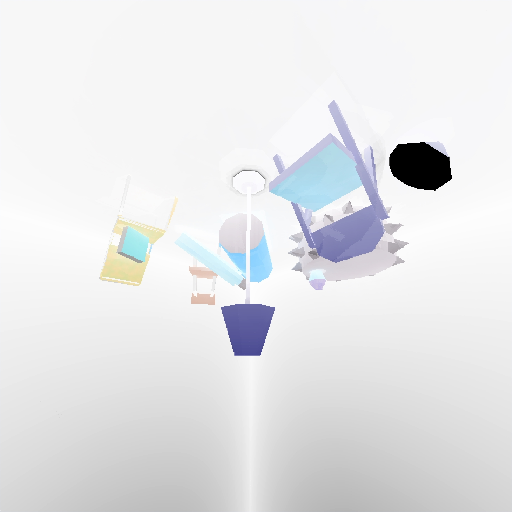
An inverted image, which appears normal due to some CSS filters.
An image scraper will collect the inverted image, and an AI trained on it won't reproduce what I intend for another human to see.
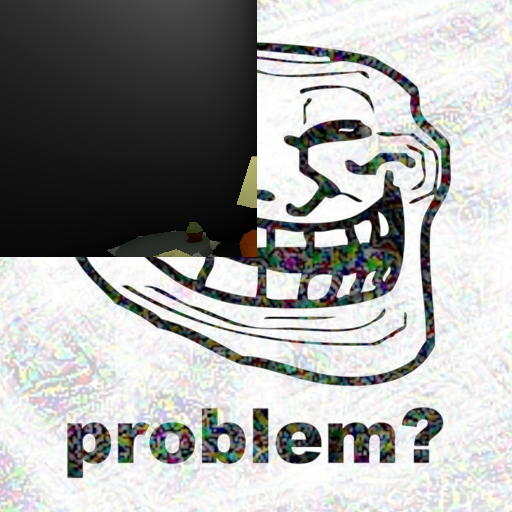
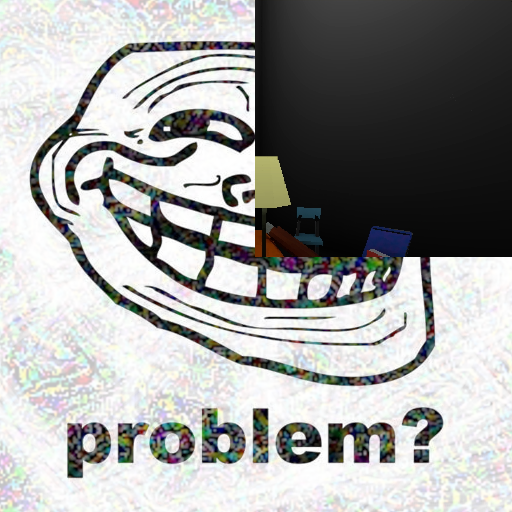
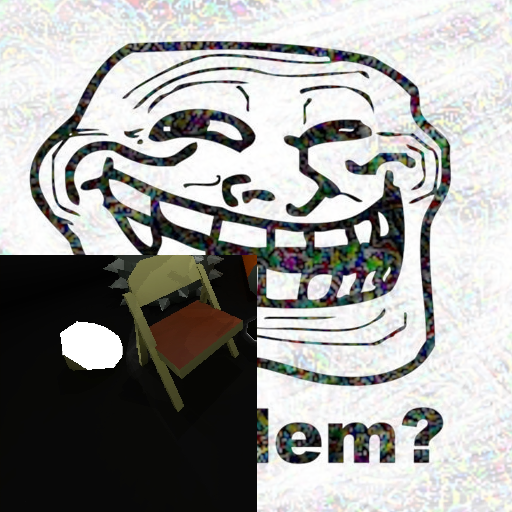
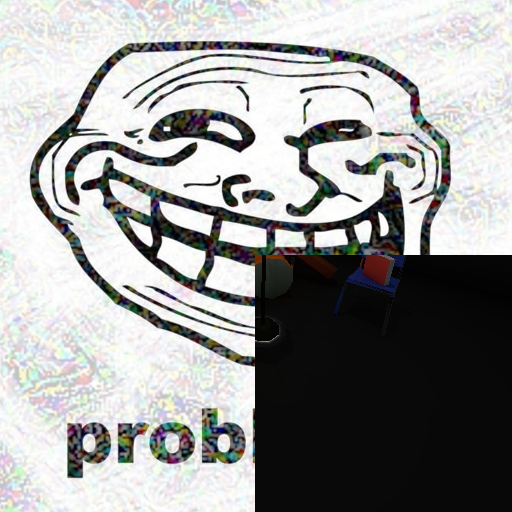
Four strategically-cropped images which are mostly trollface.
An image scraper will collect the secret "mostly trollface" which has been cropped away for the human viewers.
yeet
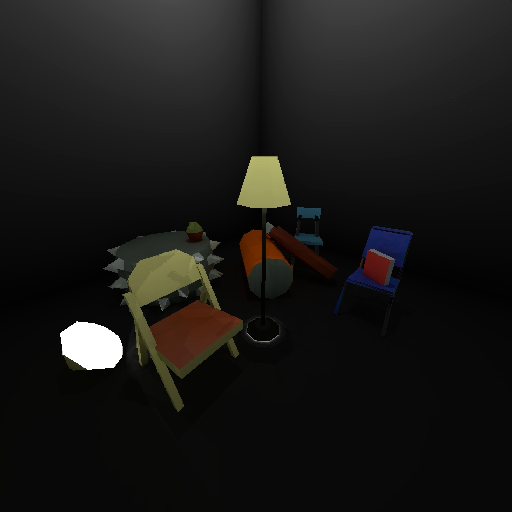
A normal image, but embedded in an SVG as Base64.
SVG is normally used for vector graphics, so this file is effectively mislabeled. Scapers looking for raster images will miss it, and scrapers looking for vector images will collect data useless for their mission.